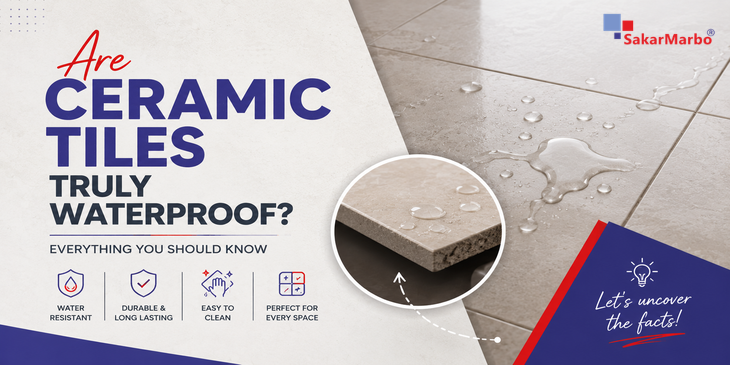
Are Ceramic Tiles Truly Waterproof ? Everything You Should Know
27 May 2026
One of the common questions asked when selecting tiles for bathrooms and kitchens is “Are ceramic tiles waterproof”. This question is significant, particularly in places with regular water exposure. The answer is that ceramic tiles are not waterproof, but they are very water-resistant and can be used in most indoor applications. It is important to recognize this difference to make the appropriate choice for long term performance.
What Does Waterproof Actually Mean?
The word ‘waterproof’ is frequently misinterpreted. Waterproof – Not absorbing any water. However, ceramic tiles contain a small amount of porosity because of their composition. This is to say that although the surface is waterproof, over time, a small amount of moisture can, in fact, penetrate. So, ceramic tiles, waterproof or not, the response is that they are water resistant, yet not waterproof.
Why Ceramic Tiles Are Still Used in Wet Areas?
Although not completely waterproof, ceramic tiles are commonly installed in spaces less exposed to water. They are water resistant. This is because their surface is actually built to resist water in normal circumstances. In reality, ceramic tiles are good and can resist water without damage. The glaze on their surface creates a barrier that keeps water from moving in easily. In everyday use, they are reliable and will hold up over time.
Where Does Water Actually Penetrate?
An important consideration many will miss is that water typically does not flow through the tile itself. Rather, it works through the grout lines and the joints between the tiles. That’s why correct installation and sealing are essential. The best tiles can be held back from performing their best if not grouted properly. When ceramic tile water resistance is needed, it is important that they are installed correctly.
Ceramic vs Porcelain: Water Resistance Comparison
When comparing ceramic vs porcelain water absorption, porcelain tiles are more resistant. They are fired at comparatively lower temperatures. This then reduces their ability to absorb more water.
But ceramic tiles are still a very good and preferred option because of their cost and quality balance. They provide adequate resistance for indoor applications and are not as expensive as other options.
Ideal Uses of Ceramic Tiles
Knowing the uses for ceramics can be helpful when choosing an application. The best applications for ceramic tiles are:
Bathroom walls
Kitchen backsplashes
Indoor flooring
They have good resistance to moderate moisture exposure. But for outdoor spaces and places where there is frequent contact with water, porcelain tiles are sometimes preferred.
Importance of Choosing the Right Indian Tiles Supplier
The performance of tiles is greatly dependent on quality. A reliable tile manufacturer in India guarantees the correct production techniques. This leads to better durability and resistance.
As a reputed tiles supplier in India, SakarMarbo specializes in providing tiles that are consistent in finish and performance. As a professional tiles exporter, the company makes sure that their products are of high quality and have a good practical usefulness.
The uniformity is particularly crucial for resellers and importers that rely on consistent quality in each shipment.
Conclusion
So, are ceramic tiles waterproof? Not completely, but they are very water resistant and are good for most indoor uses.
If installed properly and provided by a reputable supplier, they will be a practical answer for kitchens and bathrooms. When making a purchase, buyers need to understand the properties of the Tiles and select the appropriate ones to ensure durability and value.
Get Price List
100% Response Rate
We generally respond within 24 hours.
For better quotations, include:
- A self-introduction
- Special requests, if any