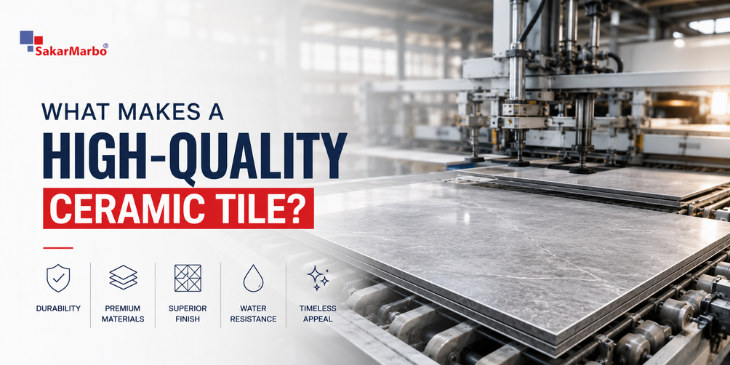
A ceramic tile may be an ideal tile for a showroom. Don’t just look at the appearance to determine if it is a quality ceramic tile.
Quality is a result of a few factors for the buyer, particularly importers, distributors, and project suppliers. The raw material is important. The manufacturing process is important. So, firing, sizing, surface finishing, and quality control.
When it comes to ceramic tiles, looks are not the only thing; they should look good at the time of sale. But should also perform the same after installation.
So, what should buyers look at?
1.The Quality Starts With the Raw Materials
The body of a ceramic tile is the first part of the tile. The raw materials are carefully chosen by the manufacturers, and the consistency of the materials may impact the product. The correct composition ensures that the tile possesses the desired density, strength, and dimensional stability. If raw materials are not properly controlled, colour, size or surface quality may vary. That’s the reason that an experienced ceramic tile manufacturer pays attention to raw material control before the tile enters the production line.
2. Water Absorption Is an Important Specification
Water absorption indicates the amount of water absorbed by a tile under normal test conditions. It is one of the most important specifications customers will check when comparing ceramic tiles. The amount of absorption needed depends on the type of tile and use. For instance, ceramic wall tiles may have different technical requirements from ceramic floor tiles. It is therefore important for the buyer to review the technical data of the product, not taking the word of the value of the absorption for the quality of the use of the product.
3. Firing Determines More Than You Think
The firing stage is a significant factor in the quality of ceramic tiles. The body, strength, color, and dimensional stability of the tile may be influenced by the temperature and firing time of the kiln and the control of the kiln. A controlled environment within the kiln ensures that the tiles have more consistent properties.
Problems like warping, size variation, and surface defects may arise if the firing process is not well controlled. Controlled firing and continuous quality checks are vital to the modern ceramic tile industry.
4. Surface Finish Should Be Consistent
The surface is always the first thing that a buyer will see and also one area that must be technically controlled. The ideal ceramic tile is uniform in appearance for the entire order. This can be glossy, matte, textured, or any other decorative finish depending on the product. Imperfections such as uneven glazing, pinholes, scratches, or unwanted surface marks can impact the final look. This is particularly relevant for high quality ceramic tiles, as the purchaser will want the surface to be uniform over a large area.
5. Shade Consistency Matters in Large Orders
Suppose you put in hundreds of tiles and discover that some of them are slightly different. Large walls and floors can be quite noticeable due to their shade variation. The ceramic tile industry therefore separates tiles into class and grade and maintains uniformity in production lots. It is always important for Buyers to check the shade classification prior to ordering in bulk. Samples are helpful, but the final product should also conform to the specifications that are agreed upon.
Batch consistency is very important to a ceramic tile exporter, especially when the ceramic tile projects are large in volume and shipped internationally.
6. Calibre and Dimensions Need Attention
The nominal size will typically be written as the size of the tile. The actual manufactured dimensions can have small variations.
This is where calibre comes into play.
Tiles are classified by their real size for a more consistent installation of the products of the same caliber. Grout joints and the overall surface appearance are also impacted by dimensional accuracy. Tile size and caliber are important considerations to make prior to ordering for importers and project buyers to avoid installation issues.
Choosing the Right Ceramic Tile Supplier
Designs are just one of the factors to consider when buying ceramic tiles.
Take a look at the technical specifications. Check water absorption. Inquire about dimensional tolerances and caliber. Review shade consistency. Know the surface finish. Most importantly, opt for a supplier who can ensure the same quality in each production batch.
The controlled use of raw materials, manufacturing, firing, finishing, and inspection are the key ingredients to a high-quality ceramic tile.
That consistency is what makes a good-looking tile a product importers and distributors can have confidence in selling in their market.
Get Price List
100% Response Rate
We generally respond within 24 hours.
For better quotations, include:
- A self-introduction
- Special requests, if any